What 3K Means
3K identifies a tow containing approximately 3,000 filaments. It does not by itself prove a finished sheet’s layup, fiber grade, resin system, strength, thickness, or suitability.

Separate the visible 3K face choice from the laminate construction, dimensions, finish, machining, and evidence needed for the part.
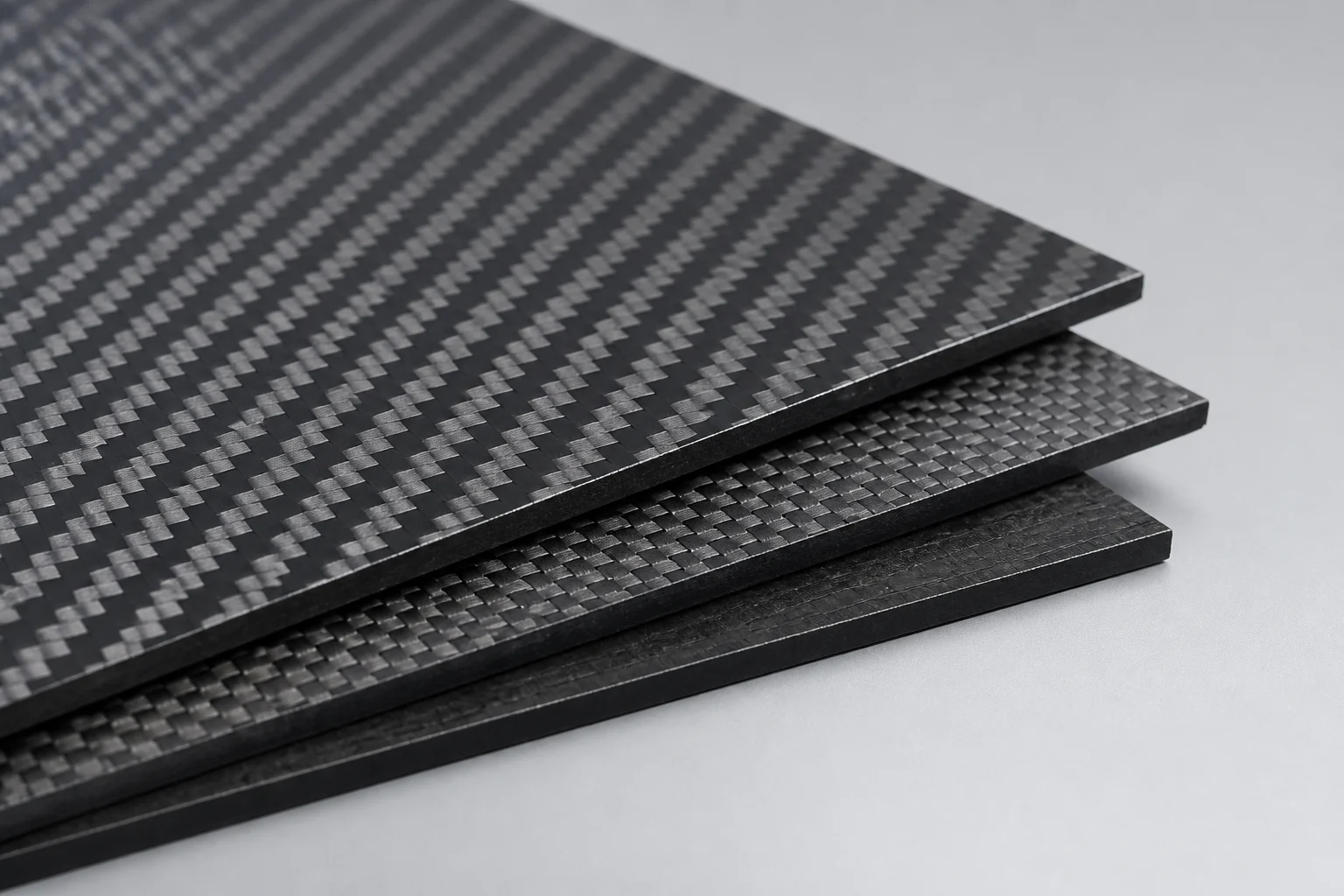
Understand what 3K describes and translate weave/finish/laminate choices into an RFQ.
3K identifies a tow containing approximately 3,000 filaments. It does not by itself prove a finished sheet’s layup, fiber grade, resin system, strength, thickness, or suitability.
Plain and twill faces create different visual patterns and handling characteristics. Specify the desired visible face while separately documenting the laminate construction needed for the part.
Matte, gloss, and process-ready surfaces should be chosen from appearance, bonding, coating, handling, and inspection needs. Confirm whether one or both faces are visible.
Provide finished thickness and length/width, plus trimming and edge requirements. 2mm, 4mm, 4x8, and generic plate requests remain options/supporting intents on the parent supplier page.
For profiles, holes, slots, and finished edges, link the material specification to a drawing and the CNC capability review.
3K woven faces are often considered where appearance and a defined laminate are both relevant. Choose by application, load case, construction, visible faces, environment, dimensions, machining, quantity, and evidence requirements.
Can 3K be plain or twill? Yes, depending on the selected face fabric. Does 3K guarantee performance? No. Can sheets be machined? Drawing-based processing can be reviewed. Include all construction and finish requirements in the RFQ.
Share the application, material or construction needs, finished dimensions, quantity, processing, and inspection expectations.
3K describes a tow of approximately 3,000 filaments. It does not by itself specify the complete laminate, resin, thickness, or finished performance.
Those face-weave and finish options can be discussed separately from the structural laminate construction and visible-face requirements.
Drawing-based cutting, drilling, slotting, and edge requirements can be reviewed through the CNC machining capability page.
Send a drawing or clear specification for a project-specific discussion.