Carbon Fiber Flat Bar
A solid rectangular section reviewed around width, thickness, length, interfaces, and structural use.

PULTRUDED PROFILE SUPPLY
Begin with the cross-section. Profile geometry, construction, length, quantity, interfaces, processing, inspection, and packing requirements are reviewed according to the project.
PROFILE TYPES
Each profile starts with a distinct cross-section, but dimensions, construction, interfaces, length, and finished requirements still need to be reviewed as one project.
A solid rectangular section reviewed around width, thickness, length, interfaces, and structural use.
A slim solid section for drawing-led supports, rails, links, and other lightweight assemblies.
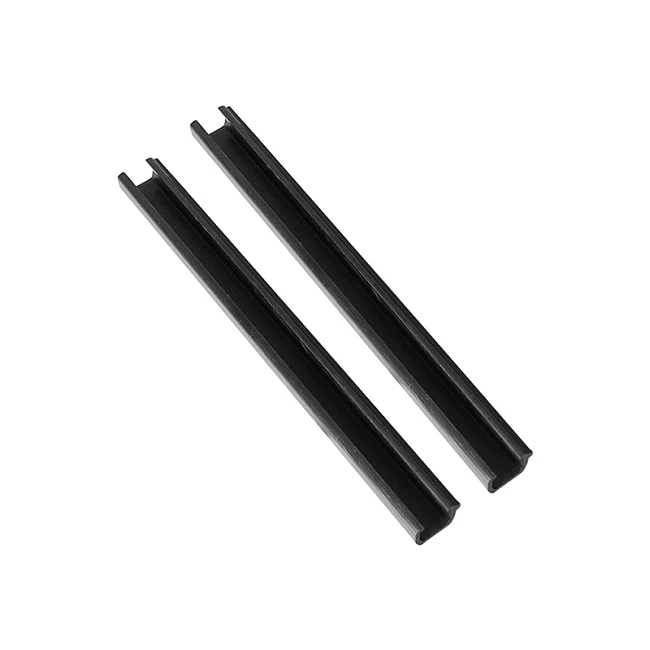
An open channel section where leg geometry, base width, length, and joining interfaces require review.
An H-shaped section assessed around flange, web, load direction, assembly, and finished geometry.
Other custom profile geometries can be reviewed from your drawing. They are not presented as standard supply categories.
FAMILY BOUNDARY
Clear geometry ownership prevents a hollow tube, solid rod, flat sheet, and open profile from competing for the same requirement.
PULTRUSION & CONSTRUCTION
Pultruded carbon fiber profiles typically emphasize longitudinal fiber reinforcement for efficient stiffness along the profile length.
Section geometry, construction, loading, interfaces, environment, and the intended application should be reviewed before a profile is selected.
GEOMETRY-LED RFQ
Send the information available. Project-dependent dimensions and acceptance requirements can then be clarified before quotation.
PDF, STEP, STP, DXF, DWG, JPG, and PNG accepted.Flat bar, strip, U, H, or a drawing-led custom geometry.
Provide the dimensions and critical measured locations available.
Supplied or finished length and any end condition.
Prototype or production quantity context for review.
PDF, STEP, STP, DXF, DWG, JPG, or PNG.
Interfaces, joints, locating details, or other finished requirements.
Cutting or drilling requirements, if applicable, for drawing review.
Required dimensional tolerance, if applicable, and agreed checks.
Destination and project-dependent protection requirements.
SECONDARY PROCESSING
Cutting, drilling and secondary-processing requirements can be reviewed from the drawing. Feasibility remains project dependent.
ILLUSTRATIVE APPLICATIONS
These categories are illustrative starting points, not customer cases or universal suitability claims.
Profile-led supports reviewed around span, interfaces, loading, and assembly.
Lightweight frame members defined by cross-section and joining requirements.
Rails, supports, and structural elements for drawing-based equipment assemblies.
Locating, holding, guiding, or support members for industrial use.
Longitudinal sections where geometry and interfaces drive the review.
Custom profile requirements integrated into a larger engineered system.
QUALITY & INSPECTION
Inspection and acceptance expectations should follow the drawing and the requirements agreed for the selected profile.
Review agreed section and finished dimensions.
Review visible condition and profile finish.
Check agreed interfaces and finished features.
Review protection for the agreed shipment.
BUYER FAQ
Answers remain project dependent where geometry, construction, processing, inspection, or packing affects feasibility.
A carbon fiber profile is a continuous non-round solid or open structural section. The cross-section, construction, length, interfaces, and application requirements should be reviewed together before selection.
Profiles are non-round solid or open sections. Rods are solid round sections, tubes are hollow sections, and sheets or plates are flat laminates. The correct family begins with the required cross-section.
JUSTAR can review carbon fiber flat bar, carbon fiber strip, U profile, and H profile requirements. Other custom profile geometries can also be reviewed from a drawing on a project-dependent basis.
Section dimensions and length can be reviewed according to the project. Share the required cross-section, dimensions, quantity, application, and any critical interfaces rather than relying on an assumed standard-size table.
Cutting, drilling, end-feature, and secondary-processing requirements can be reviewed from the drawing. Feasibility is confirmed for the selected profile and finished requirement; the CNC page provides the detailed machining review path.
Provide the profile type or cross-section, section dimensions, length, quantity, intended application, drawing if available, end features, processing requirements, inspection expectations, and packing or shipment requirements.
Yes. The inquiry system accepts PDF, STEP, STP, DXF, DWG, JPG, and PNG files so geometry, dimensions, interfaces, and project-dependent processing requirements can be reviewed together.
Dimensional, visual, agreed feature, and packing checks are reviewed against the drawing and confirmed project requirements. No universal tolerance or inspection certificate is assumed for the complete family.
START A PROFILE PROJECT
Share the profile type, section dimensions, length, quantity, drawing, end features, processing needs, inspection expectations, and destination.