Understanding Carbon Fiber Sheets: Material and Uses
What Is Carbon Fiber?
Carbon fiber is a remarkable material known for its strength and lightness. It’s made of thin

strands of carbon atoms bonded together in a crystal structure. These fibers are thinner than
human hair but incredibly strong. When woven into sheets, they create a material that’s
stronger than steel but much lighter.
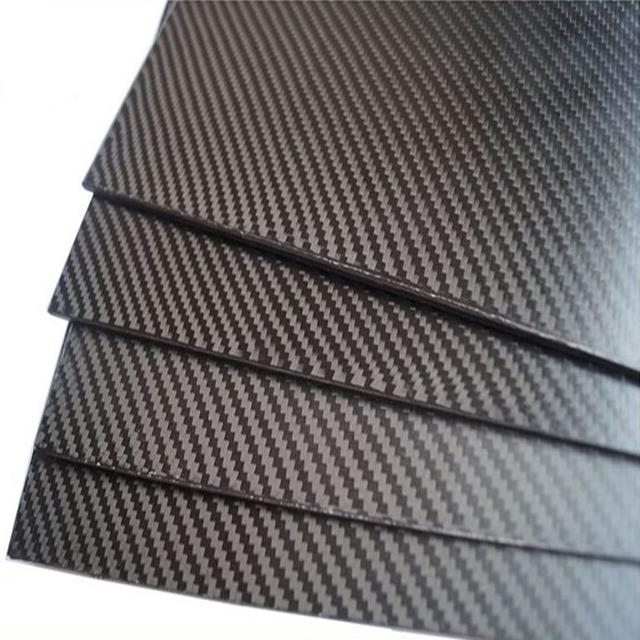
Carbon fiber sheets are versatile products used in many industries. They’re made by layering
carbon fiber fabric with resin. The result is a rigid, durable sheet that can be cut and
shaped. These sheets come in various thicknesses to suit different needs. Common thicknesses
include 1mm, 3mm, and 1/4 inch (about 6.35mm).
Applications of Carbon Fiber in Various Industries
Carbon fiber sheets have found their way into many industries due to their unique properties.
Here’s a list of some key applications:
- Aerospace: Used in aircraft and spacecraft parts for weight reduction
- Automotive: Found in high-performance cars for body panels and structural components
- Sports Equipment: Used in bicycles, tennis rackets, and golf clubs
- Marine: Applied in boat hulls and masts for strength and corrosion resistance
- Construction: Utilized for reinforcing concrete structures
- Medical: Used in prosthetics and medical imaging equipment
Each industry values carbon fiber for different reasons. Aerospace and automotive sectors
prize its strength-to-weight ratio. Sports equipment makers appreciate its vibration damping
properties. The construction industry uses it for its corrosion resistance and durability.
Key Features of Different Carbon Fiber Sheet Thicknesses
Comparing Thickness: 1mm, 3mm, and 1/4 Inch
The thickness of a carbon fiber sheet greatly affects its properties and uses. Let’s compare

the three common thicknesses:
1mm sheets are the thinnest of the three. They’re flexible and easy to work with. These sheets
are ideal for applications where weight is crucial. They’re often used in model making and
small-scale projects.
3mm sheets offer a balance between flexibility and rigidity. They’re stiff enough for
structural uses but can still be shaped with some effort. These sheets are popular in
automotive and marine applications.
1/4 inch (6.35mm) sheets are the thickest and most rigid. They provide maximum strength and
stiffness. These sheets are used in heavy-duty applications where structural integrity is key.
They’re common in aerospace and industrial machinery.
Material Strength and Durability
Carbon fiber sheets are known for their impressive strength-to-weight ratio. This property
varies with thickness. Thicker sheets generally offer more strength and durability. However,
the relationship isn’t always linear.
1mm sheets, while not as strong as thicker options, still offer remarkable strength for their
weight. They’re ideal for applications where flexibility is needed. 3mm sheets provide a
significant boost in strength without a large weight increase. They’re often the sweet spot
for many applications.
1/4 inch sheets offer the highest strength and durability. They can withstand extreme forces
and are used in the most demanding applications. However, they’re also the heaviest and least
flexible of the three options.
Weight and Cost Considerations
Weight and cost are crucial factors when choosing carbon fiber sheets. Generally, thicker
sheets weigh more and cost more. However, the relationship isn’t always straightforward.
1mm sheets are the lightest and usually the least expensive. They’re a good choice for
projects with tight weight or budget constraints. 3mm sheets offer a balance of performance
and cost. They’re often the most cost-effective option for many applications.
1/4 inch sheets are the heaviest and typically the most expensive. However, their superior
strength means less material may be needed overall. This can sometimes offset the higher
initial cost.
When considering cost, it’s important to look beyond just the price per sheet. Factor in the
amount of material needed, installation costs, and long-term durability. Sometimes, a more
expensive option can be more economical in the long run.
Case Studies: Using Carbon Fiber Sheets in Practice
Success Stories of 1mm Carbon Fiber Sheets
1mm carbon fiber sheets have found success in various applications. One notable example is in

the world of professional cycling. A leading bicycle manufacturer used 1mm sheets to create
ultra-lightweight frame components. The result was a bike that was 20% lighter than previous
models without sacrificing strength.
Another success story comes from the aerospace industry. A satellite manufacturer used 1mm
sheets to create solar panel substrates. The thin, lightweight sheets allowed for larger
solar arrays without increasing launch weight. This led to a 15% increase in power generation
capacity.
In the consumer electronics sector, a smartphone maker used 1mm carbon fiber sheets for the
back panel of a premium model. This resulted in a phone that was stronger and lighter than
competitors’ models. The sleek, high-tech appearance of the carbon fiber also boosted sales.
3mm Carbon Fiber Sheets in Action
3mm carbon fiber sheets have proven their worth in many practical applications. In the
automotive industry, a sports car manufacturer used 3mm sheets for body panels. This reduced
the car’s weight by 30% compared to traditional materials. The result was improved
acceleration and fuel efficiency.
Marine applications have also benefited from 3mm sheets. A yacht builder used them to
construct hull components. The carbon fiber’s corrosion resistance and light weight improved
the boat’s performance and longevity. Fuel consumption was reduced by 25% due to the weight
savings.
In the world of prosthetics, 3mm sheets have made a significant impact. A medical device
company used them to create lightweight, durable prosthetic limbs. Patients reported improved
comfort and mobility compared to traditional prosthetics.
1/4 Inch Carbon Fiber Sheets: Performance and Results
1/4 inch carbon fiber sheets have found their niche in heavy-duty applications. An aerospace
company used these thick sheets to create structural components for a new aircraft design.
The result was a 40% weight reduction compared to traditional materials. This led to
significant fuel savings and increased payload capacity.
In the field of industrial machinery, a manufacturer used 1/4 inch sheets to create
high-stress components. The carbon fiber’s durability extended the machine’s lifespan by 50%.
This resulted in reduced maintenance costs and improved productivity for end-users.
Bridge construction has also benefited from 1/4 inch carbon fiber sheets. An engineering firm
used them to reinforce a deteriorating concrete bridge. The carbon fiber strengthening
extended the bridge’s life by 30 years, saving millions in replacement costs.
These case studies highlight the versatility of carbon fiber sheets across different
thicknesses. From lightweight 1mm sheets to robust 1/4 inch options, each thickness has its
place. The key is matching the right thickness to the specific needs of each application.